Zhuoming Chen 陈卓明
Making generative AI faster, cheaper, and smarter
I am a Ph.D. student at the School of Computer Science, Carnegie Mellon University (2023–), advised by Prof. Beidi Chen and Prof. Zhihao Jia. My research builds machine learning systems that accelerate large language and generative models — through speculative decoding, sparse and randomized algorithms, and test-time scaling.
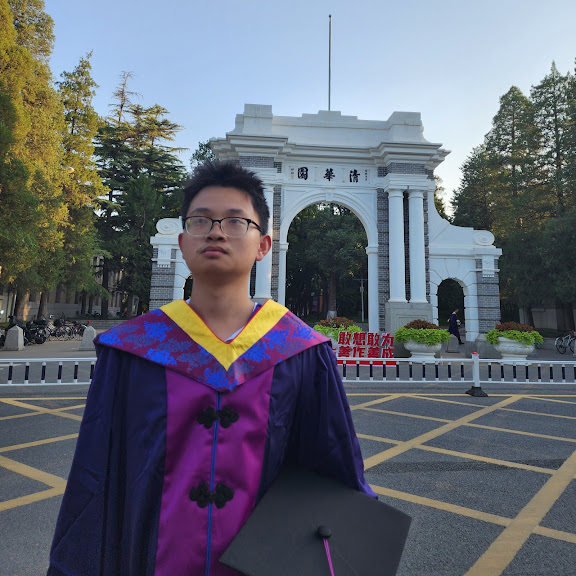
I received my B.Eng. in Automation from Tsinghua University, where I worked with Prof. Jidong Zhai. I have also worked with Prof. Xuehai Qian (Purdue).
Research
I work at the intersection of machine learning systems, generative AI, and randomized algorithms. My goal is to push the efficiency frontier of large models so that powerful generation and reasoning become practical everywhere — from datacenter clusters to consumer devices. A recurring theme in my work is exploiting structure (sparsity, hierarchy, and randomness) to break long-standing latency, memory, and throughput trade-offs without sacrificing quality.
Efficient LLM Inference
Speculative decoding and sparse attention that accelerate long-context and agentic generation — Vortex, Sequoia, SpecInfer, SpecExec, TriForce, MagicDec, Sirius, and FSA.
Randomized Algorithms
LSH sampling, rejection sampling, and Monarch-structured attention that turn randomness into scalable systems — MagicPiG, Jackpot, and MonarchRT.
Scaling & Training Systems
Rethinking test-time scaling laws, efficient long-context RL, and memory-efficient training for long sequences and graphs — Kinetics, Sparrow, GSM-Infinite, Mini-Sequence Transformer, and Mithril.
News
Publications
Bold indicates my name; * denotes equal contribution. See Google Scholar for the full list.
tex
arch
pot
tics
∞
PiG
Dec
ril
Exec
us
Seq
Force
Infer
GBDT
Preprints
RT
row
Serve